
"from Central America"
4000 article(s) found

Introduction to the characteristics of El Salvador Himalayan Coffee Flavor Flavor Manor
El Salvador coffee El Salvador (ElSalvador) is one of the small countries in Central America, where coffee is light, aromatic, pure, slightly sour and characterized by excellent balance of flavor. It is a specialty of Central America. With sour, bitter, sweet and other taste characteristics, the best baking degree is moderate, deep. The origin of coffee in the early 1990s, guerrilla warfare greatly damaged the country's national economy and made coffee

El Salvador Himalayan coffee flavor and taste area with sour, bitter and sweet taste characteristics
The coffee from El Salvador is a specialty of Central America, where it is light, fragrant, pure and slightly sour. Like Guatemala and Costa Rica, coffee in El Salvador is graded according to altitude, and the higher the altitude, the better the coffee. The best brand is Pipil, which is what the Azbec-AztecMayan called coffee.

Coffee bean producing areas-Central America-Costa Rica (Costa Rica)
Well-known representative coffee: Tarrazu Costa Rica, like other Central American countries, widely grows Arabica coffee. Its coffee is mainly grown in two high areas, one is the high area near the capital San Jose, and the other is the Tarrazu mountains southeast of San Jose. Because coffee is grown in Costa Rica at high altitudes.
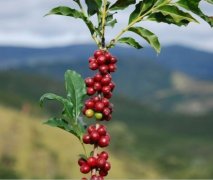
Coffee bean producing areas-Central America-Costa Rica
Well-known representative coffee: Tarrazu Costa Rica, like other Central American countries, widely grows Arabica coffee. Its coffee is mainly grown in two high areas, one is the high area near the capital San Jose, and the other is the Tarrazu mountains southeast of San Jose. Because coffee is grown in Costa Rica at high altitudes.

Introduction to Central American boutique coffee what is the flavor of coffee in the Caribbean?
Have you ever heard of a coffee belt? The so-called coffee belt refers to the area near the equator between the Tropic of Cancer and the Tropic of Cancer. This region is close to the equator and the innate climatic conditions are ideal, so most of the coffee producing areas in the world are in the "coffee belt". According to the world map, seven countries in Central America are in the coffee belt, including Belize, Guatemala, Honduras and Thrall.
Costa Rica Fire Phoenix Manor single bean species, brand recommendation and manor introduction
For the exchange of professional baristas, please follow the Coffee Workshop (Wechat official account cafe_style) Costa Rica Fire Phoenix Manor single bean varieties, brand recommendations and manor introduction of the national culture: Costa Rica has a variety of cultures, which is the confluence of Central and South America. When the Spanish conquered America in the 16th century, the northern part of Costa Rica was the most Mayan civilization.

What does Salvadoran Coffee Milan mean? Good coffee growing factors in El Salvador
For the exchange of professional baristas, please follow the coffee workshop (Wechat official account cafe_style). Next, let's take a look at the special report on Central and South America. Central America is one of the four largest coffee producing regions in the world. With its unique natural conditions, many high-quality coffee beans have been cultivated. From Honduras introduced yesterday, we went southeast to El Salvador, which is located in the southwest of Central America and on the Pacific coastline.

Central America Honduras coffee region
Honduran coffee is imported from El Salvador. Coffee production was initially in a state of inexorable heat until the Brazilian frost of 1975. Brazil was hit hard, coffee production plummeted, while Honduras took advantage of the opportunity, coffee production soared from 500,000 bags to 1.8 million bags, and was robbed. Coffee production in Honduras really took off after that. Now Honduras Coffee

Description of Flavor and taste of boutique Coffee beans in El Salvador Coffee producing area
Republic of El Salvador, Repblica de El Salvador in Spanish, the Republic of El Salvador in English. It is located in Central America, bordering Guatemala and Honduras in the north, and the Pacific coastline in the west and south. The smallest country in Central America and the most densely populated country in Central America. The land area is 21393 square kilometers.

Brief introduction of Santa Barara Manor in San Juan Heido region of Honduras Coffee Bean in Northern Central America
In Honduras, coffee-producing areas are divided into six major areas, spread to the west and south, namely Santa Barbara (Santa Barbara), El Paraiso (El Paraiso), Copan (Copan), La Paz (La Paz) and Comayagua (Olan Mound), with an average planting height of more than 1100 meters above sea level. The variety of coffee is Elaraby

A brief introduction to the overall soft market price of El Qomolangma boutique coffee beans
The current situation of coffee production is a natural and man-made disaster, which is a perfect description of the challenges facing the coffee industry in El Salvador. Despite getting rid of the haze of war, El Salvador's coffee production still faces challenges from time to time, including: 1998, hurricanes; 2001, earthquakes; 2002, volcanic eruptions; 2012, leaf rust
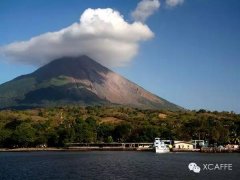
Lemon Tree Estate, Nicaragua
Nicaragua is located in the middle of Central America. It is the largest country in Central America. It borders Honduras in the north, Costa Rica in the south, the Caribbean Sea in the east and the Pacific Ocean in the west. Its eastern coastal plain, high temperature and rainy tropical marine climate, multi-jungle swamp; western coastal lowlands, there are more active volcanoes. The central and northern parts are highlands, with an annual average temperature of 18℃ and annual precipitation of 1500~2500 mm.

The dispute between different levels of flavor in the coffee bean producing areas of Honduras in Central America
Professional coffee knowledge exchange more coffee bean information please follow the coffee workshop (Wechat official account cafe_style) front street-Honduras coffee producing area Honduras has complex terrain and diversified climate. Located in the coastal plain of Central America, it has a tropical rain forest climate, with an average annual temperature of 31 ℃. The mountain belongs to subtropical forest climate, the annual average temperature is 23 ℃, the rainy season is from June to November, the temperature is mild and rainy.

Origin, Development, History and Culture of Fine Coffee beans in Nicaragua, Los Congo Manor in Central America
Although it's not as obvious as Kenyan coffee, it doesn't matter if it feels gentle and gentle. Many people who have tasted Nicaraguan coffee will think that this kind of coffee is no different from El Salvador or Honduras coffee. In fact, each kind of coffee has its own characteristics, and each kind of coffee has its own noteworthy places. The development of Nicaraguan coffee industry is really not easy.

Characteristics of Guatemalan coffee beans in different producing areas Coffee bean flavor in each producing area of Guatemala
For the exchange of professional baristas, please follow the Coffee Workshop (official Wechat account cafe_style). There are seven countries in Central America, namely, Belize, Costa Rica, El Salvador, Guatemala, Honduras, Nicaragua and Panama. All seven countries in Central America produce coffee, among which Guatemala, Costa Rica and Honduras are global coffee exporters.

The coffee flavor of Santa Barara Manor in the San Juan Hido region of Honduras in northern Central America tastes good.
In Honduras, coffee-producing areas are divided into six major areas, spread to the west and south, namely Santa Barbara (Santa Barbara), El Paraiso (El Paraiso), Copan (Copan), La Paz (La Paz) and Comayagua (Olan Mound), with an average planting height of more than 1100 meters above sea level. The variety of coffee is Elaraby

Nicaragua, the poorest country in Central America, cultivation of coffee on the estate Climate Altitude
Among them, in Costa Rica, where the government strictly controls water use, coffee farmers have created honey treatments named after the retention of "different thickness of pulp", including yellow honey, red honey, and black honey, which was once the name of Costa Rica's COE champion La Brumas de Zurqui. Traditionally, Nicaragua

Waiqiang Plateau Coffee Manor Central and South America
High-quality coffee beans are refined by water treatment. The coffee beans with less impurities can be obtained by the water washing method, but if the water quality and time are not properly controlled during the fermentation process, the coffee beans will easily be infected with the sour taste of excessive fermentation. and dry beans also need to pay attention to timely re-inspection to prevent coffee beans from being contaminated by wet ground and sundries. Processed

Coffee beans from Honduras, a coffee producer in northern Central America, introduce fine coffee.
The granules of coffee beans in Honduras are large in shape, uniform in size and glossy in color. In order to facilitate harvesting, farmers will prune the coffee trees to no more than 150 centimeters, because if they grow too high, they have to set up ladders to pick, which is not only time-consuming, but also may damage the trees by bending branches. As the ripening period of each fruit of the coffee bean is different, it is necessary to keep the coffee bean in good condition.
